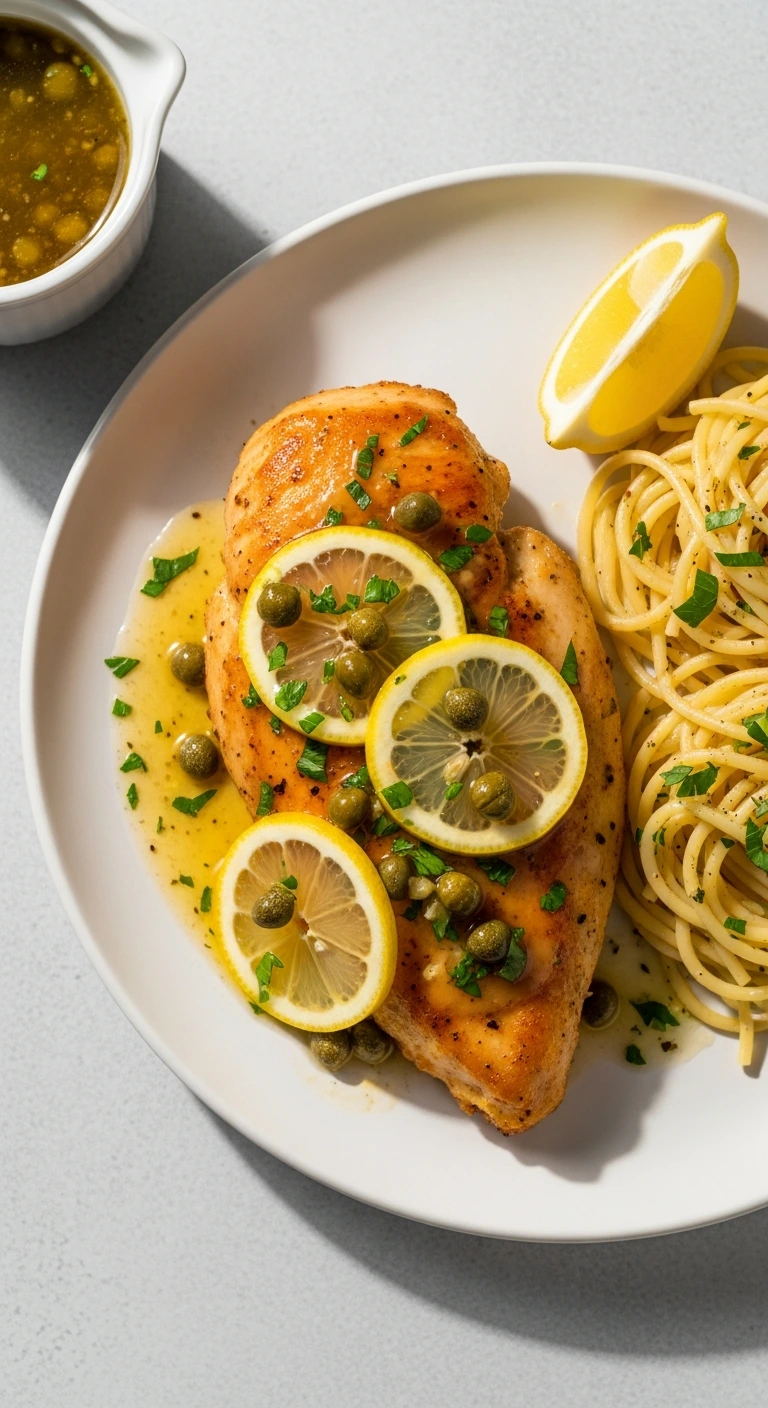
You know that lemony, buttery chicken piccata you order when you’re trying to impress someone at an Italian restaurant?
Yeah, this is it. Except you’re making it at home in about 30 minutes, and it’s going to taste way better than anything you’d get served on a white tablecloth.
I used to think chicken piccata was one of those recipes you needed culinary school to pull off. All that fancy pan sauce, the perfectly crispy chicken, the balance of tart and savory. But turns out, it’s actually pretty straightforward once you know the tricks.
This recipe has been in my rotation for years now, and every single time I make it, my husband asks if we can have it again tomorrow. That’s the kind of recipe this is. The kind that makes you feel like you’re eating at a fancy restaurant while you’re sitting on your couch in sweats.
What You’ll Need
Here’s everything for your chicken piccata shopping list:
For the Chicken
| Ingredient | Amount | Notes |
|---|---|---|
| Boneless, skinless chicken breasts | 4 (1.5-2 lbs total) | Pound to ½-inch thickness |
| All-purpose flour | 1 cup | For dredging |
| Salt | 1 teaspoon | Kosher or sea salt |
| Black pepper | ½ teaspoon | Freshly ground |
| Garlic powder | ½ teaspoon | Not garlic salt |
| Olive oil | 3 tablespoons | Extra virgin |
| Butter | 2 tablespoons | For cooking |
For the Sauce
| Ingredient | Amount | Why It Matters |
|---|---|---|
| Butter | 4 tablespoons | Creates silky texture |
| Fresh lemon juice | ⅓ cup (2-3 lemons) | Never use bottled |
| Chicken broth | ½ cup | Low sodium preferred |
| Capers | ¼ cup, drained | Adds briny punch |
| Garlic | 3 cloves, minced | Fresh only |
| White wine | ¼ cup | Optional but recommended |
| Fresh parsley | 2 tablespoons, chopped | For garnish |
| Lemon slices | For serving | Makes it pretty |
Pro Tip: The real secret to authentic chicken piccata? Fresh lemon juice. Don’t even think about using the bottled stuff. It’s not the same and your taste buds will know the difference.
Tools You’ll Need
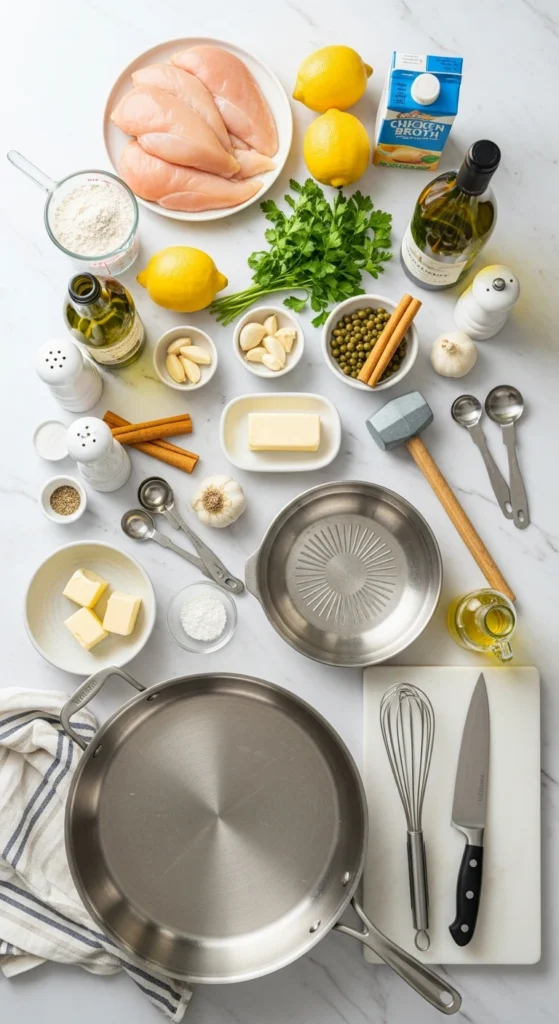
Before you start cooking your chicken piccata, grab these:
- Large skillet (preferably stainless steel or cast iron)
- Meat mallet or rolling pin
- Plastic wrap or parchment paper
- Tongs
- Measuring cups and spoons
- Shallow dish for dredging
- Cutting board
- Sharp knife
- Whisk
- Serving platter
Pro Tips for Perfect Chicken Piccata
Pound it out properly. 🔨
This isn’t just for fun. You want your chicken breasts to be an even thickness (about ½ inch) so they cook evenly. Thick spots stay raw while thin spots get overcooked. Place the chicken between two sheets of plastic wrap and go to town with a meat mallet.
Don’t skip the dredging step.
That flour coating isn’t just there to make the chicken pretty. It creates a golden crust that helps the sauce stick to the chicken and adds texture. Plus, it helps thicken the sauce later.
Get your pan hot.
Like, really hot. You want to hear that sizzle the second the chicken touches the pan. This is how you get that restaurant-quality golden crust on your chicken piccata. If your pan isn’t hot enough, the chicken will just steam and you’ll end up with sad, pale chicken.
Use the brown bits.
After you cook the chicken, there’s going to be these beautiful caramelized bits stuck to the bottom of your pan. Don’t you dare wash them away. That’s where all the flavor lives.
Chef’s Secret: When you add your liquids to make the sauce, use a wooden spoon to scrape up all those bits. This is called deglazing and it’s basically magic for your chicken piccata sauce.
Taste as you go.
The balance between tart lemon and savory butter is personal. Start with the measurements I’ve given you, but don’t be afraid to adjust.
Substitutions and Variations
Protein Swaps for Chicken Piccata
| Instead of Chicken Breasts | Try This | Adjustment Needed |
|---|---|---|
| Chicken thighs | More forgiving, juicier | Add 2-3 minutes cooking time |
| Turkey cutlets | Leaner option | Same cooking time |
| Pork chops (thin cut) | Different but delicious | Same cooking time |
| Veal cutlets | Traditional Italian | Reduce cooking time by 1 minute |
Other Swaps
Wine alternatives: If you don’t want to use white wine, just add an extra ½ cup of chicken broth and a splash more lemon juice. The wine adds depth, but it’s not make-or-break.
Caper-free version: I know some people aren’t fans of capers. You can leave them out entirely, but I’d recommend adding a handful of chopped green olives instead to keep that briny, salty element that makes chicken piccata so good.
Gluten-free option: Swap the all-purpose flour for a 1:1 gluten-free flour blend or almond flour. The texture will be slightly different but still delicious.
Extra veggies: Want to bulk this up? Throw in some spinach or asparagus at the end. Just toss them in the sauce for the last couple minutes of cooking until wilted or tender.
How to Make Chicken Piccata (Step-by-Step)
Step 1: Prep the Chicken
Place your chicken breasts between two pieces of plastic wrap. Use a meat mallet (or rolling pin) to pound them to an even ½-inch thickness.
This is probably the most important step for perfect chicken piccata, so don’t rush it.
Step 2: Set Up Your Dredging Station
Mix the flour, salt, pepper, and garlic powder in a shallow dish. This is your coating that’s going to create that gorgeous golden crust.
Step 3: Dredge the Chicken
Take each piece of chicken and coat it in the flour mixture. Make sure both sides are covered, then shake off any excess.
You want a light, even coating, not a thick layer.
Step 4: Heat Your Pan
Add the olive oil and 2 tablespoons of butter to a large skillet over medium-high heat. Let it get hot.
You’ll know it’s ready when the butter starts to foam and sizzle.
Step 5: Cook the Chicken
Place the chicken in the hot pan. Don’t move it around.
Let it sit there and develop that crust for about 3-4 minutes. Flip and cook the other side for another 3-4 minutes until golden brown and cooked through (internal temp should hit 165°F). Transfer to a plate and set aside.
Step 6: Make the Sauce
Lower the heat to medium. Add the minced garlic to the same pan (don’t wipe it out) and cook for about 30 seconds until fragrant.
Pour in the white wine and use a wooden spoon to scrape up all those brown bits from the bottom of the pan. Let it simmer for about 2 minutes.
Step 7: Add the Liquids
Pour in the chicken broth and lemon juice. Let it simmer for another 3-4 minutes until it reduces slightly.
This is where your chicken piccata sauce starts coming together.
Step 8: Finish the Sauce
Add the remaining 4 tablespoons of butter, one tablespoon at a time, whisking constantly. This creates that silky, rich sauce.
Stir in the capers.
Step 9: Return the Chicken
Place the chicken back in the pan with the sauce. Spoon some sauce over the top and let it warm through for about 2 minutes.
Step 10: Garnish and Serve
Sprinkle with fresh parsley and add lemon slices for garnish. Serve immediately while it’s hot and the sauce is still silky.
Time Breakdown: The whole thing takes about 30 minutes from start to finish, and most of that is just hands-on cooking time. No weird techniques, no fancy equipment. Just good food.
What to Serve With Chicken Piccata
This dish goes perfectly with:
Carbs that soak up the sauce: 🍝
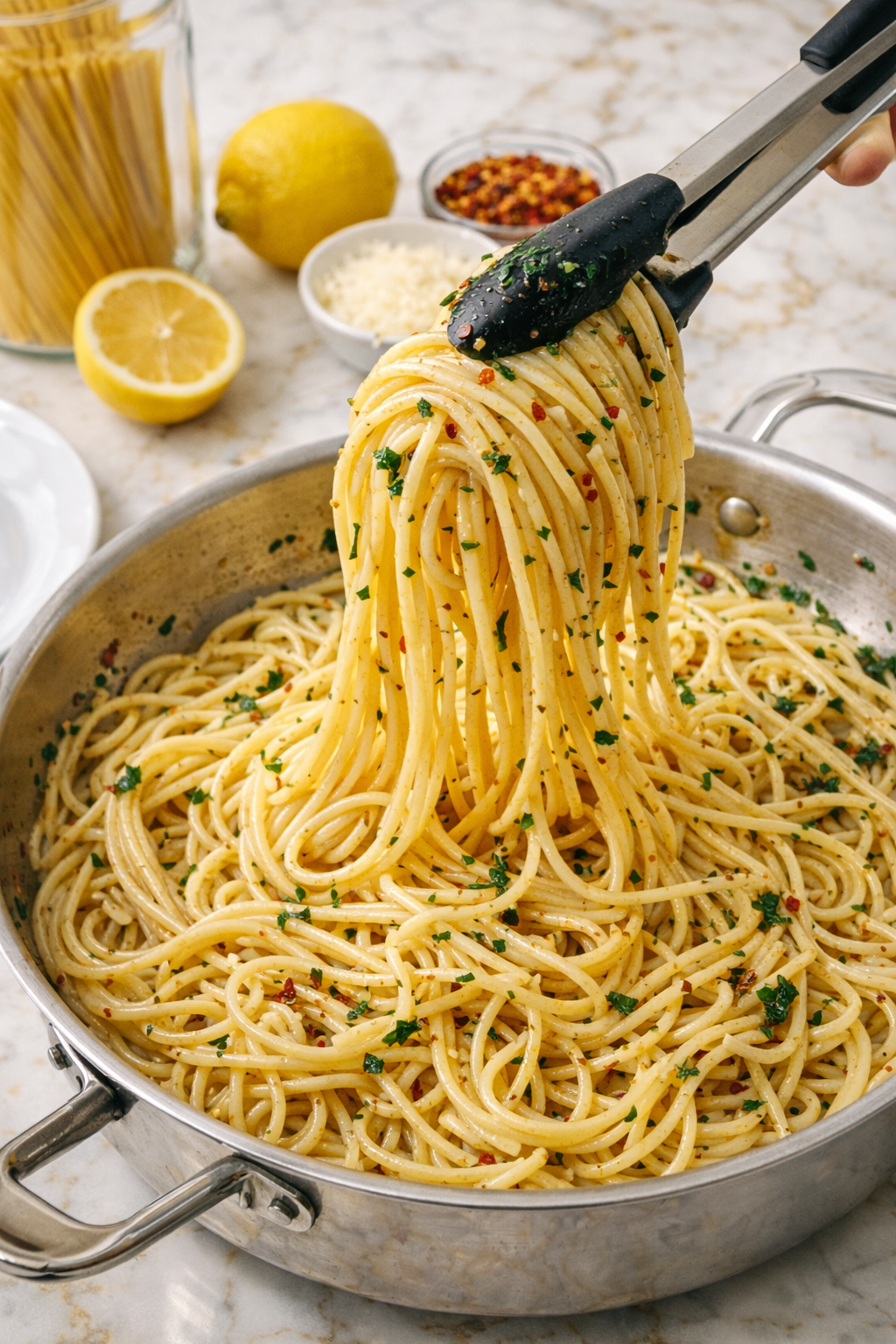
- Angel hair pasta
- Linguine or fettuccine
- Garlic mashed potatoes
- Creamy risotto
- Crusty Italian bread
Vegetables:
- Roasted asparagus
- Sautéed green beans
- Roasted Brussels sprouts
- Steamed broccoli
Salads:
- Simple arugula salad with lemon vinaigrette
- Caesar salad
- Caprese salad
The sauce is so good you could probably serve it with cardboard and it would taste amazing. But I’d recommend pasta.
Make Ahead Tips
| What to Prep | How Far Ahead | Storage Tips |
|---|---|---|
| Pound chicken | Up to 4 hours | Cover and refrigerate |
| Dredging station | 2 hours | Keep at room temp |
| Make sauce | Up to 2 days | Airtight container in fridge |
| Cook chicken | Not recommended | Loses crispy texture |
The sauce can be reheated gently on the stove when you’re ready to serve. You might need to whisk in a little extra butter or chicken broth to bring back that silky texture.
I don’t recommend cooking the chicken piccata ahead of time because it won’t have that crispy exterior when you reheat it. This is one of those dishes that’s best cooked fresh.
Leftovers and Storage
Storing: Store leftover chicken and sauce separately in airtight containers in the fridge for up to 3 days.
Reheating: Warm the sauce gently in a skillet over low heat. Add the chicken and let it warm through for a few minutes.
Don’t microwave it unless you’re okay with the chicken losing its texture.
Bonus idea: Chop up leftover chicken piccata and toss it with pasta for an easy lunch the next day. Just warm everything together in a pan with a splash of chicken broth.
Nutritional Information
| Nutrient | Per Serving (1 chicken breast with sauce) |
|---|---|
| Calories | 420 |
| Protein | 38g |
| Carbohydrates | 14g |
| Fat | 24g |
| Fiber | 1g |
| Sugar | 1g |
| Sodium | 680mg |
| Cholesterol | 135mg |
Keep in mind this is an estimate and will vary based on the exact ingredients you use and portion sizes.
Common Chicken Piccata Mistakes (And How to Avoid Them)
Mistake #1: Overcooking the Chicken
The problem: Dry, tough chicken that tastes like cardboard.
The fix: Use a meat thermometer. Pull the chicken off the heat when it hits 165°F. It’ll continue cooking as it rests.
Mistake #2: Crowding the Pan
The problem: Chicken steams instead of getting crispy.
The fix: Work in batches if needed. Give each piece space to breathe.
Mistake #3: Using Bottled Lemon Juice
The problem: Flat, one-dimensional flavor that screams “fake.”
The fix: Always use fresh lemons for chicken piccata. Always.
Mistake #4: Not Deglazing Properly
The problem: Missing out on all that flavor stuck to the pan.
The fix: Add your liquid and scrape, scrape, scrape. Those brown bits are gold.
FAQ About Chicken Piccata
Can I use chicken thighs instead of breasts?
Absolutely. Thighs are actually more forgiving because they stay juicier. Just make sure to pound them to an even thickness and adjust cooking time if needed (they might take a minute or two longer).
Do I have to use white wine?
Nope. You can skip it and use extra chicken broth plus a splash more lemon juice. The wine adds depth and complexity to your chicken piccata, but it’s not essential.
Can I make this dairy-free?
You’d lose some of that richness, but you could use olive oil instead of butter. The sauce won’t be as silky, but it’ll still taste good. Maybe add a bit more lemon juice to compensate for the missing richness.
Why is my sauce not thickening?
Make sure you’re using enough flour when dredging the chicken (some of it comes off in the pan and helps thicken the sauce). Also, let the sauce reduce for a few minutes before adding the final butter.
Can I freeze chicken piccata?
The chicken freezes okay, but the sauce doesn’t really hold up well in the freezer. If you’re planning to freeze, I’d recommend freezing just the cooked chicken and making fresh sauce when you’re ready to serve.
My chicken is dry. What did I do wrong?
Probably overcooked it. Chicken breasts cook fast, especially when they’re pounded thin. Get yourself a meat thermometer and pull them off the heat when they hit 165°F.
Can I double this recipe?
Sure, but you’ll need to work in batches. Don’t crowd the pan or your chicken will steam instead of getting that golden crust. Cook the chicken in batches, set it aside, then make one big batch of sauce at the end.
What does piccata mean?
According to The Spruce Eats, “piccata” refers to a method of preparing meat (usually veal or chicken) where it’s sliced, sautéed, and served in a lemon and caper sauce. The technique originated in Italy and has become a beloved Italian-American classic.
Why This Chicken Piccata Recipe Works
Let me break down the science behind why this recipe is so good:
The Secret Formula: Crispy chicken + tangy lemon + salty capers + rich butter = flavor explosion in your mouth.
The flour coating creates a barrier that keeps the chicken moist while developing a golden crust. It also helps thicken the sauce.
Pounding the chicken ensures even cooking and creates more surface area for that delicious crust.
Deglazing with wine picks up all the caramelized flavor from the pan and adds acidity that balances the butter.
Finishing with cold butter (called monter au beurre in fancy chef speak) creates an emulsified, glossy sauce that clings to the chicken.
The capers add bursts of briny, tangy flavor that cut through the richness.
It’s all about balance. Acid from the lemon, fat from the butter, salt from the capers, and the savory chicken bringing it all together.
Wrapping Up
There you have it. Chicken piccata that’s going to make your weeknight dinner feel like a special occasion.
The crispy chicken, the tangy lemon sauce, the salty capers. It all comes together in this dish that tastes way more complicated than it actually is.
And isn’t that the dream? Food that impresses but doesn’t stress you out.
Next time you’re standing in front of your fridge wondering what to make for dinner, pull out those chicken breasts and give this a try. I promise you won’t regret it.
Now I want to hear from you. Have you made chicken piccata before? Did you love it or hate it? Any secret tips I should know about?
Drop a comment below and let me know how it goes when you make this recipe. 💛
Read Also
The Ultimate Chicken and Spinach Recipe: 5 Pro Secrets for Restaurant-Quality Results at Home
The Ultimate Cheat Lasagna Recipe: 30-Minute Comfort Food That Tastes Like It Took Hours