You know that feeling when you’re craving something that hits all the right notes at once?
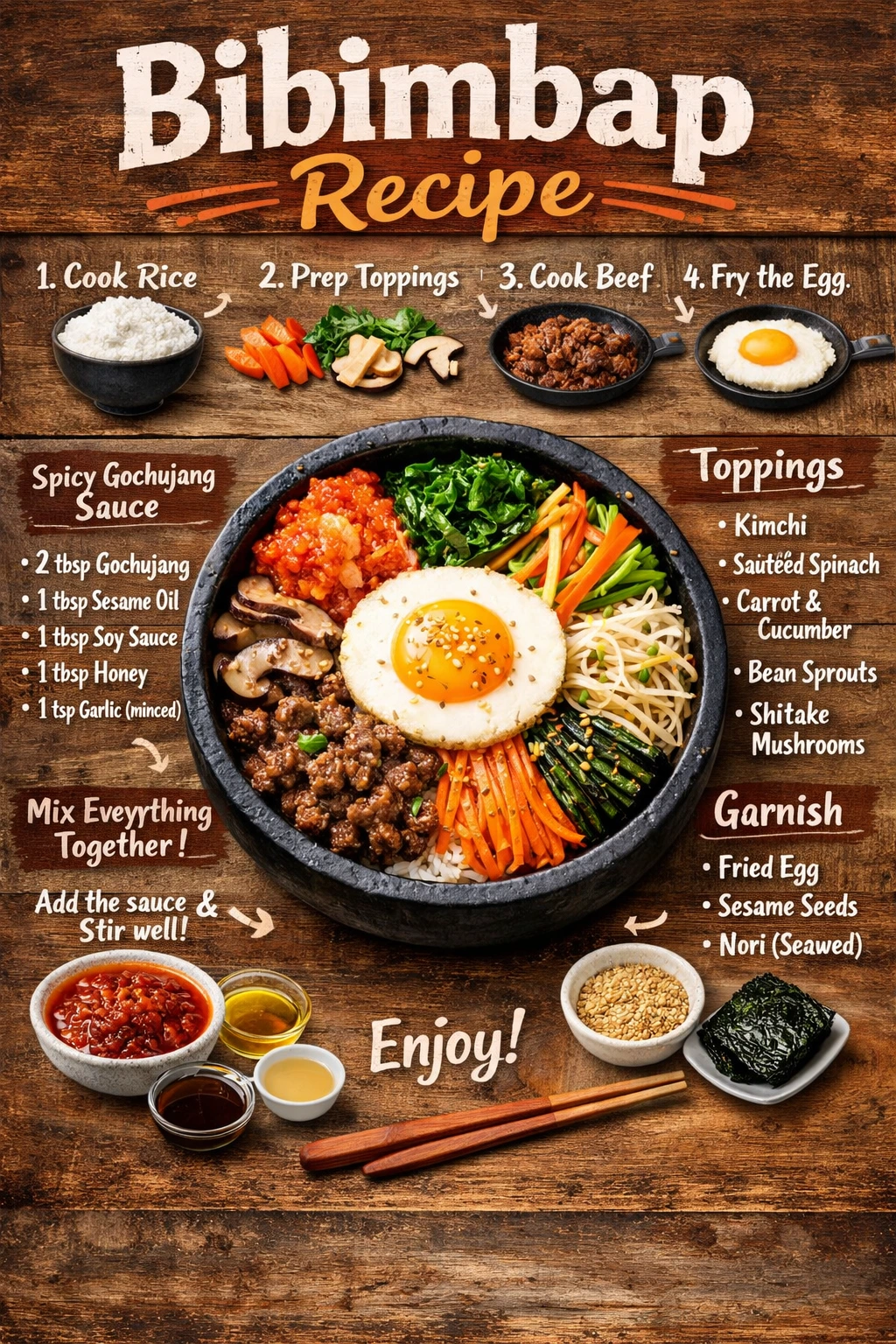
Bibimbap Recipe, Sweet. Savory. Spicy. Crunchy. Soft. All in one bowl.
That’s bibimbap.
And here’s the thing that surprised me most when I first made it at home: it’s way easier than it looks. I’m talking about a dish that seems like it should take hours of prep and a culinary degree, but actually comes together faster than waiting for delivery.
The secret?
Everything can be prepped ahead, the components are flexible (use what you’ve got), and the assembly is basically just arranged leftovers in a bowl. But fancy leftovers.
This is comfort food that doesn’t feel heavy. It’s meal prep that doesn’t get boring. It’s the kind of dinner that makes you feel like you actually have your life together.
So if you’ve been intimidated by Korean cooking or think bibimbap is too complicated for a weeknight, I’m about to change your mind.
What You’ll Need
For the Rice:
- 2 cups short-grain white rice (jasmine works too)
- 2½ cups water
For the Beef:
- 1 lb beef (ribeye, sirloin, or ground beef)
- 3 tablespoons soy sauce
- 1 tablespoon sesame oil
- 2 cloves garlic, minced
- 1 tablespoon brown sugar
- ½ teaspoon black pepper
For the Vegetables:
- 2 cups fresh spinach
- 1 large carrot, julienned
- 1 zucchini, julienned
- 8 oz mushrooms, sliced (shiitake if you can find them)
- 1 cup bean sprouts
- 4 eggs
- 2 tablespoons vegetable oil (divided)
- Salt to taste
- Sesame oil for drizzling
For the Gochujang Sauce:
- 3 tablespoons gochujang (Korean red pepper paste)
- 1 tablespoon sesame oil
- 1 tablespoon rice vinegar
- 1 tablespoon honey or sugar
- 1 teaspoon water
- 1 clove garlic, minced
For Garnish:
- Toasted sesame seeds
- Sliced green onions
- Extra sesame oil
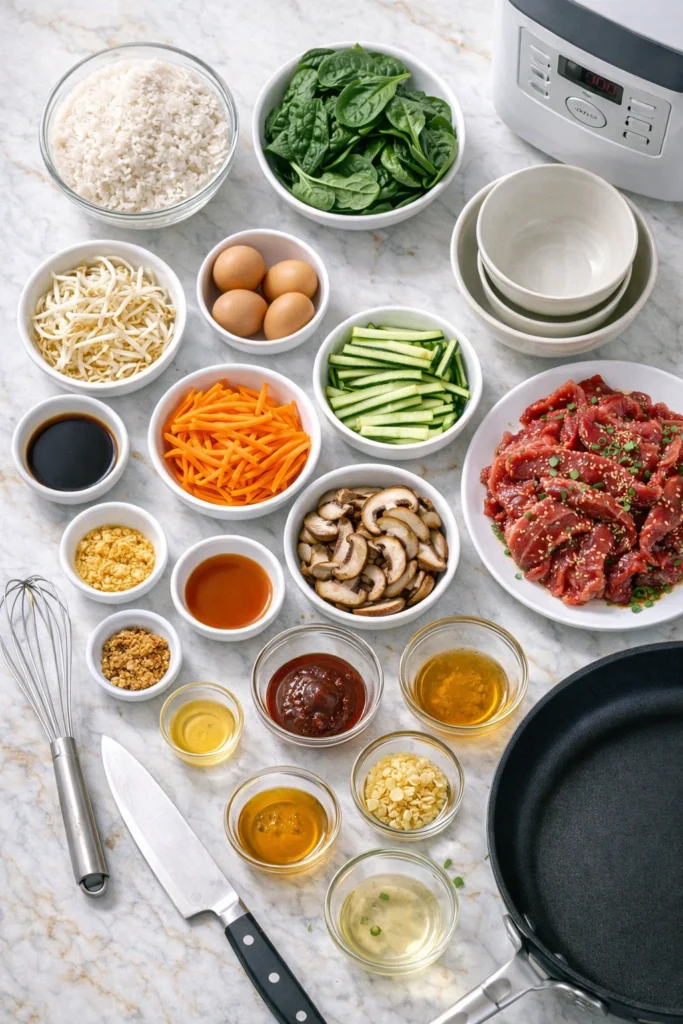
Tools You’ll Need
You don’t need special equipment for this, which is honestly one of my favorite things about bibimbap.
| Tool | Why You Need It |
|---|---|
| Rice cooker or medium pot | For perfectly fluffy rice |
| Large skillet or wok | To cook vegetables separately |
| Small mixing bowl | For marinating the beef |
| Whisk | To blend the gochujang sauce |
| Sharp knife | For julienning vegetables |
| 4 serving bowls | Stone bowls are traditional but regular ones work |
Pro Tips
1. Get your mise en place ready
I know it sounds chef-y, but trust me on this one.
Bibimbap comes together fast once you start cooking, so having everything prepped and ready makes the whole process smooth instead of chaotic.
Chop all your veggies, mix your sauces, and have them lined up before you turn on the heat.
2. Cook each vegetable separately
This seems like extra work at first, but each vegetable gets its moment to shine with its own seasoning.
Plus, they stay crisp and distinct instead of turning into mush.
You’re building layers of flavor here, not making a stir-fry.
3. Don’t skip the sesame oil
I used to think sesame oil was one of those ingredients you could swap out or skip.
I was wrong.
It’s what makes bibimbap taste like bibimbap. That nutty, toasted flavor ties everything together. Use the toasted kind, not the light version.
4. The crispy rice bottom is optional but magical 🔥
If you’ve got a bit of extra time and want to take this to the next level, press your rice into a hot oiled skillet for a few minutes after everything’s assembled.
You’ll get this incredible crispy, golden crust called nurungji that’s crunchy and addictive.
Game changer.
5. Temperature matters for the egg
The Golden Rule: You want that yolk runny so it creates a sauce when you mix everything together.
Cook your egg sunny-side up over medium-low heat. The whites should be set but the yolk should jiggle when you shake the pan.
If you overcook it, you lose that creamy sauce element that makes bibimbap so good.
How to Make Bibimbap
Step 1: Cook the Rice
Start with your rice because everything else builds on this foundation.
Rinse your rice under cold water until the water runs clear. This removes excess starch and prevents gummy rice.
Rice Cooker Method:
- Add rice and water
- Hit the button
- Forget about it
Stovetop Method:
- Bring rice and water to a boil in a medium pot
- Reduce heat to low, cover
- Simmer for 15 minutes
- Turn off heat and let sit, covered, for another 10 minutes
- Fluff with a fork
Step 2: Marinate the Beef
While your rice cooks, get your beef ready.
If you’re using steak, slice it thin against the grain (partially freezing it for 20 minutes makes this easier).
If you’re using ground beef, you can skip the slicing.
Marinade Mix:
3 tbsp soy sauce
1 tbsp sesame oil
2 cloves minced garlic
1 tbsp brown sugar
½ tsp black pepper
Add your beef and toss until it’s well coated. Let it sit while you prep the vegetables.
The sugar in the marinade helps create that caramelized exterior when you cook it.
Step 3: Prep Your Vegetables
This is where most of your active time goes, but it’s mindless work that you can do while listening to music or a podcast.
| Vegetable | Prep Method | Time |
|---|---|---|
| Carrot | Julienne into matchsticks | 3 min |
| Zucchini | Julienne into matchsticks | 3 min |
| Mushrooms | Slice thin | 2 min |
| Bean sprouts | Rinse and drain | 1 min |
| Spinach | Rinse | 30 sec |
Line everything up in separate piles. You’ll cook each one individually.
Step 4: Cook the Vegetables
Heat a large skillet over medium-high heat with a small drizzle of oil.
Spinach (1-2 minutes):
- Add spinach with a pinch of salt
- Cook until just wilted
- It cooks down a lot, so don’t panic
- Squeeze out excess water
- Drizzle with sesame oil
Carrots (2-3 minutes):
- Wipe out your pan, add oil
- Sauté with salt until slightly softened but still crunchy
- Keep that bite!
Zucchini (2-3 minutes):
- Same process
- Cook until tender
- Transfer to separate bowl
Mushrooms (4-5 minutes):
- These need longer for that golden color
- Let them sit without stirring for the first minute
- You want that sear
- Season with salt
Bean sprouts (1 minute):
- Quick blanch in boiling water
- Drain and season with salt and sesame oil
- Or eat them raw if you prefer
Step 5: Cook the Beef
Now for the protein.
Heat your skillet over high heat until it’s really hot. Add your marinated beef (work in batches if needed).
Timing Guide:
| Beef Type | Cook Time | What to Look For |
|---|---|---|
| Sliced steak | 3-4 min | Caramelized edges, medium-rare center |
| Ground beef | 5-6 min | Browned and crumbly |
| Chicken | 6-7 min | Cooked through, golden |
| Tofu | 4-5 min | Crispy edges |
The key here is high heat and not overcrowding the pan.
You want a sear, not steamed beef.
Step 6: Make the Gochujang Sauce
While everything’s cooking, whisk together your sauce ingredients:
- 3 tbsp gochujang
- 1 tbsp sesame oil
- 1 tbsp rice vinegar
- 1 tbsp honey
- 1 tsp water
- 1 clove minced garlic
Pro Move: Taste it and adjust. Want it spicier? Add more gochujang. Sweeter? More honey. The sauce should be thick but pourable.
Step 7: Fry the Eggs
Turn your heat to medium-low and add a small amount of oil to your pan.
Crack your eggs gently into the pan. You can do all four at once if your pan is big enough, or work in batches.
Cover the pan and cook for about 3-4 minutes.
You want the whites completely set but the yolk still runny and jiggly. If you like your yolk more cooked, go another minute.
Step 8: Assemble Your Bowls
This is the fun part. 🎨
Divide your rice between four bowls. I like to pack it down slightly so it holds its shape.
Arrange your vegetables in sections on top of the rice. There’s no wrong way to do this, but the traditional method is to make sections like spokes on a wheel.
It looks like this:
      Spinach
   /          \
Carrots      Zucchini
   |    🍳    |
Mushrooms  Bean Sprouts
   \          /
       Beef
Place a fried egg right in the center of each bowl.
Sprinkle everything with sesame seeds and green onions.
Drizzle with a bit of extra sesame oil if you’re feeling fancy.
Step 9: Serve with Sauce
Put a generous spoonful of gochujang sauce on the side of each bowl or drizzle it over the top.
When you’re ready to eat, break that yolk, mix everything together with your spoon, and watch it all combine into this beautiful, saucy mess.
That’s bibimbap. ✨
Substitutions and Variations
Protein Swaps
| Instead of Beef | Try This |
|---|---|
| Chicken thighs | Marinate the same way, adds juicy flavor |
| Pork tenderloin | Sliced thin, quick cooking |
| Firm tofu | Press it first, then pan-fry until crispy |
| Shrimp | Cooks in 2-3 minutes, perfect for weeknights |
| Leftover rotisserie chicken | When you’re feeling lazy (no judgment) |
Vegetable Variations
What works: Bell peppers, cucumber, radishes, bok choy, snap peas, broccoli, kale
Traditional ingredients you probably can’t find: Fernbrake, bellflower root (don’t stress about these)
My favorite combo when I’m short on veggies: Just spinach, carrots, and mushrooms. Still delicious.
Rice Alternatives
- Brown rice: Takes longer to cook but adds nutty flavor
- Cauliflower rice: For low-carb version
- Quinoa: I’ve done this and it was surprisingly good
- White rice: The classic, and for good reason
Spice Level Adjustments
| Spice Preference | What to Do |
|---|---|
| Can’t handle spice | Use less gochujang or skip it entirely |
| Want it medium | Stick to the recipe as written |
| Like it HOT 🔥 | Add gochugaru (Korean red pepper flakes) |
| Completely mild | Just sesame oil and soy sauce |
Dietary Modifications
Vegan Version:
- Skip the beef and egg
- Double up on mushrooms
- Add crispy tofu
- Use maple syrup instead of honey in sauce
Gluten-Free:
- Use tamari instead of soy sauce
- Check your gochujang label (most are GF but not all)
- Everything else is naturally gluten-free
Low-Carb:
- Cauliflower rice base
- Load up on extra vegetables
- Add avocado for healthy fats
Special Bowl Styles
Dolsot Bibimbap: If you have a stone bowl (dolsot), heat it up really hot, add sesame oil, press in your rice, and let it sit on the heat for a few minutes before adding toppings. You’ll get that crispy rice crust I mentioned earlier.
Make Ahead Tips
This is hands-down one of the best meal prep recipes out there. 📦
What to Prep When
| Component | How Far Ahead | Storage Tips |
|---|---|---|
| Vegetables | 3 days | Store each separately in airtight containers |
| Marinated beef | Overnight (or cook 2 days ahead) | Raw marinade keeps 24 hrs, cooked keeps 3-4 days |
| Gochujang sauce | 2-3 weeks | Airtight container in fridge |
| Rice | 2-3 days | Store in fridge, reheat with splash of water |
| Fried egg | DON’T prep ahead | Always cook fresh |
My Weekly Meal Prep Strategy:
Sunday:
- Cook all vegetables
- Make double batch of sauce
- Cook rice
- Marinate beef (don’t cook yet)
Monday-Thursday:
- Reheat rice (1 minute microwave)
- Reheat vegetables (30 seconds)
- Cook fresh beef (3 minutes)
- Fry fresh egg (4 minutes)
- Total assembly time: 8 minutes
For meal prep containers, I pack everything separately in compartmented containers and fry a fresh egg when I’m ready to eat.
Timing Breakdown
Let’s be real about how long this actually takes.
First Time Making It
| Task | Time |
|---|---|
| Prep all ingredients | 20 min |
| Cook rice | 25 min |
| Cook all vegetables | 15 min |
| Cook beef | 5 min |
| Fry eggs | 5 min |
| Make sauce | 3 min |
| Assemble bowls | 5 min |
| Total | ~75 min |
After You’ve Made It Once
You’ll be faster. You’ll get it down to about 45-50 minutes total.
With Meal Prep Done
If you’ve already prepped vegetables and sauce? 15 minutes from start to eating.
Leftovers and Storage
Storage Times
| Item | Fridge | Freezer | Best Method |
|---|---|---|---|
| Rice | 5 days | 3 months | Airtight container |
| Cooked vegetables | 3-4 days | Not recommended | Separate containers |
| Beef | 3-4 days | 3 months | Airtight container |
| Gochujang sauce | 2-3 weeks | 6 months | Small jar |
| Fried eggs | 1-2 days | Don’t freeze | Cook fresh instead |
| Assembled bowls | 2 days | Not recommended | Keep components separate |
Reheating Guide
Rice: Microwave with a damp paper towel on top (1-2 minutes)
Vegetables: Microwave for 30 seconds or eat cold (they’re good both ways)
Beef: Gentle reheat in pan or microwave (30-45 seconds)
Eggs: Always fry fresh
Storage Pro Tip: If you’re planning to eat leftovers, keep the components separate until you’re ready to eat. Everything stays fresher and tastier that way.
What NOT to Freeze
- Bean sprouts (get mushy)
- Zucchini (too watery when thawed)
- Assembled bowls (texture nightmare)
- Fried eggs (rubbery and sad)
What Freezes Great
- Marinated raw beef (portion it first)
- Cooked beef (in marinade or sauce)
- Gochujang sauce (ice cube trays work great)
- Cooked carrots and mushrooms (okay in a pinch)
Nutrition Information
Per Serving (1 bowl):
| Nutrient | Amount | % Daily Value |
|---|---|---|
| Calories | 620 | 31% |
| Protein | 32g | 64% |
| Carbohydrates | 68g | 23% |
| Fat | 22g | 28% |
| Fiber | 5g | 18% |
| Sugar | 8g | – |
| Sodium | 980mg | 43% |
Notes:
- This varies based on sauce amount and protein choice
- Ground beef = higher fat than sirloin
- More veggies + less rice = lower carbs
- Tofu version = lower calories and fat
Macro-Friendly Modifications
| Goal | Adjust This |
|---|---|
| Higher protein | Add extra beef or a second egg |
| Lower carb | Cauliflower rice, extra vegetables |
| Lower fat | Use chicken breast instead of ribeye |
| Lower sodium | Reduce soy sauce, use low-sodium version |
Pairing Suggestions
Bibimbap is pretty filling on its own, but if you want to round out the meal:
Traditional Korean Sides
Kimchi 🌶️ The obvious choice. That tangy, spicy crunch is perfect alongside the rich, savory bowl.
Korean Cucumber Salad (Oi Muchim) Cool, crisp, refreshing. Takes 5 minutes to make.
Miso Soup or Seaweed Soup A light broth-based soup makes this feel like a complete Korean meal.
Drinks That Work
| Drink | Why It Works |
|---|---|
| Soju | Traditional Korean spirit, clean and crisp |
| Light lager beer | Cuts through the richness |
| Iced barley tea | Non-alcoholic, slightly nutty |
| Sparkling water with lime | Refreshing and palate-cleansing |
Dessert Options
Keep it simple after this filling meal:
- Fresh fruit (mango, watermelon, berries)
- Green tea ice cream
- Hot tea (green or barley)
- Mochi (if you want something sweet but light)
Cost Breakdown
Let’s talk budget because this recipe is actually pretty economical. 💰
Ingredient Costs (Approximate)
| Ingredient | Cost |
|---|---|
| Rice (2 cups) | $0.80 |
| Beef (1 lb) | $8.00 |
| Vegetables (all) | $6.00 |
| Eggs (4) | $1.20 |
| Gochujang (jar lasts 20+ recipes) | $0.50 |
| Sesame oil | $0.30 |
| Other seasonings | $0.50 |
| Total | ~$17.30 |
| Per Serving | ~$4.33 |
Compare that to restaurant bibimbap at $12-18 per bowl.
You’re making 4 servings for less than the cost of ordering one.
Ways to Make It Even Cheaper
- Use ground beef instead of steak (saves $3-4)
- Skip expensive vegetables like shiitake mushrooms
- Use regular mushrooms or whatever’s on sale
- Make your own kimchi (if you’re ambitious)
- Buy rice in bulk
- Grow your own green onions (they regrow in water!)
FAQ
Can I use instant rice?
Yep. It won’t have quite the same texture as properly cooked rice, but it works in a pinch.
Minute rice saves time on busy weeknights.
Just don’t expect that perfect sticky texture.
Where do I find gochujang?
Most regular grocery stores carry it now in the international aisle. If not, any Asian market will have it.
You can also order it online.
It lasts forever in the fridge, so one tub goes a long way.
Do I have to use all these vegetables?
Nope. Use what you like and what you have.
I’ve made this with just spinach and carrots when that’s all I had. Still delicious.
The point is variety in color and texture, but you work with what you’ve got.
Can I make this without the egg?
Sure, but you’ll miss out on that creamy yolk sauce.
If you don’t eat eggs, try:
- A drizzle of tahini
- Extra sesame oil
- Avocado slices for creaminess
- Soft tofu on top
Is bibimbap supposed to be spicy?
It can be, but it’s totally adjustable.
The heat comes from the gochujang sauce, so you control the spice level. Start with less and add more if you want.
Some people eat it with no sauce at all.
What’s the difference between bibimbap and dolsot bibimbap?
| Bibimbap | Dolsot Bibimbap |
|---|---|
| Regular bowl | Hot stone bowl |
| Soft rice throughout | Crispy rice bottom |
| Room temperature | Sizzling hot |
| Good | AMAZING |
Same ingredients, different presentation. The stone bowl creates that addictive crispy rice crust.
Can kids eat this?
Absolutely. Just serve the gochujang sauce on the side so they can control how much they add.
Most kids love the rice, veggies, and beef without the spicy sauce.
My friend’s 6-year-old calls this “the rainbow bowl” and asks for it weekly.
How do I eat bibimbap?
Mix everything together with your spoon before eating.
Breaking the yolk and stirring it all up is part of the experience. Every bite should have a little bit of everything.
Don’t be polite about it. Get in there and mix it up until it’s a beautiful mess.
Can I meal prep the whole bowl?
You can, but I don’t recommend it.
The textures get weird when everything sits together. Keep components separate and assemble when ready to eat.
Takes an extra 2 minutes but tastes 10x better.
What if I can’t find short-grain rice?
Use what you have. Jasmine rice, basmati, even brown rice.
It won’t be as sticky, but it’ll still taste great. The vegetables and sauce are what make bibimbap special, not the exact rice variety.
Is this recipe authentic?
It’s close to traditional home-style bibimbap, but I’ve made it accessible for American kitchens.
Some ingredients (like fernbrake) are hard to find here, so I’ve suggested alternatives that still give you that delicious bibimbap experience.
Korean grandmas might have notes, but they’d probably still eat it. 😊
Wrapping Up
Here’s what I love most about bibimbap: it’s one of those recipes that feels special but doesn’t require you to be a perfect cook. Bibimbap Recipe.
You can prep the whole thing in stages.
You can customize it to use what’s in your fridge.
You can make it as simple or fancy as you want.
And when you sit down with that colorful bowl in front of you, break that golden yolk, and mix everything together into one perfect bite?
It just feels right.
So grab your ingredients, put on some good music, and spend an hour making something that’ll feed you well for days.
Your future self will thank you when you’ve got these gorgeous bowls waiting in the fridge.
Now I want to know: are you team crispy rice bottom or team regular bowl?
Drop a comment and let me know how your bibimbap turns out. And if you swap in any creative ingredients or have questions, I’m all ears.
Read Also
Baked BBQ Chicken That’ll Have You Licking Your Fingers (and the Plate)