Stop scrolling through 47 different alfredo recipes trying to find “the one.”
You just found it.
This isn’t some watered-down, flour-thickened version that tastes like cafeteria food. This is the real deal.
Silky, rich, and so good you’ll want to lick the bowl clean when no one’s looking.
I’ve spent years perfecting this recipe, and I’m telling you right now: once you make alfredo this way, you’ll never go back to the jarred stuff.
You might not even order it at restaurants anymore because you know you can make it better at home.
The secret? It’s all about the technique.
And it’s way easier than you think.
What You’ll Need
For the Sauce
| Ingredient | Amount | Why It Matters |
|---|---|---|
| Heavy cream | 1 cup | Creates that silky texture |
| Unsalted butter | ½ cup (1 stick) | Adds richness and helps emulsify |
| Parmesan cheese (freshly grated) | 1½ cups (4 oz) | The star of the show |
| Garlic (fresh, minced) | 3 cloves | Aromatic backbone |
| Salt | ¼ teaspoon | Enhances all flavors |
| Black pepper | ¼ teaspoon | Adds subtle warmth |
| Nutmeg (optional) | Pinch | Secret ingredient ✨ |
For the Pasta
- 1 lb fettuccine (or your favorite pasta)
- 1 tablespoon salt (for the pasta water)
- 1 cup reserved pasta water (don’t skip this!)
Optional Add-Ins
🍗 Grilled chicken breast, sliced
🍤 Cooked shrimp
🥦 Steamed broccoli florets
🍅 Sun-dried tomatoes
🌿 Fresh parsley for garnish
Pro Tips
Buy a block of Parmesan and grate it yourself.
Pre-shredded cheese has anti-caking agents that prevent it from melting smoothly.
This one change will transform your sauce from grainy to silky.
Save that pasta water before you drain.
It’s liquid gold.
The starch in it helps bind the sauce to your pasta and gives you the perfect creamy consistency without adding more cream.
Low and slow wins the race.
High heat will break your sauce and make it greasy.
Keep it on medium-low and be patient.
Your reward is a sauce that coats every strand of pasta like a dream.
Fresh garlic only.
Jarred garlic will give you a weird, almost metallic taste.
Take the 30 seconds to mince fresh cloves.
Your taste buds will thank you.
Serve immediately.
Alfredo sauce doesn’t like to wait around.
It thickens as it cools, so have everyone at the table ready to eat when you plate it up.
Tools You’ll Need
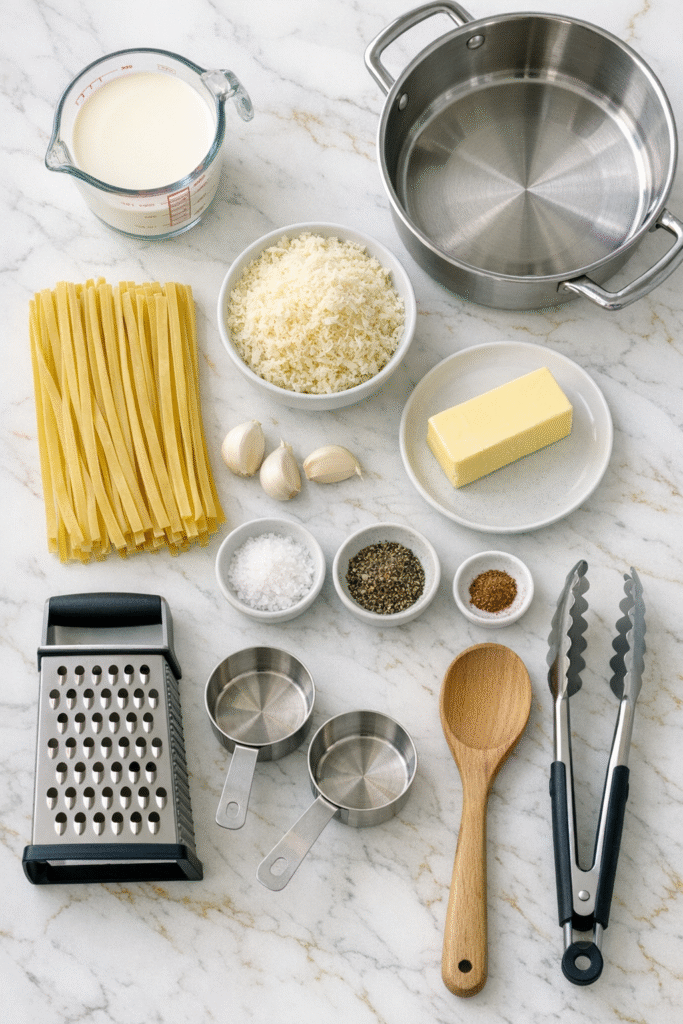
Essential Equipment:
| Tool | Purpose |
|---|---|
| Large pot (6+ quarts) | Boiling pasta |
| Large skillet (12 inches) | Making the sauce |
| Wooden spoon | Stirring without scratching |
| Box grater or microplane | Grating fresh Parmesan |
| Colander | Draining pasta |
| Measuring cups | Accuracy matters here |
| Tongs or pasta fork | Tossing pasta in sauce |
Substitutions and Variations
Common Swaps
| Instead of This | Try This | The Result |
|---|---|---|
| Heavy cream | Half-and-half | Lighter but less rich |
| Butter | Olive oil | Different flavor profile |
| Parmesan | Pecorino Romano | Sharper, saltier taste |
| Fettuccine | Penne or rigatoni | Still delicious |
| Fresh garlic | Roasted garlic | Sweeter, milder flavor |
Flavor Variations
🌶️ Spicy Alfredo: Add ½ teaspoon red pepper flakes with the garlic
🍄 Mushroom Alfredo: Sauté 8 oz sliced mushrooms before starting the sauce
🥓 Bacon Alfredo: Top with crispy bacon bits
🌿 Herb Garden: Add fresh basil, oregano, and thyme
🧀 Extra Cheesy: Mix in ½ cup mozzarella with the Parmesan
Make Ahead Tips
| Task | When to Do It | Storage |
|---|---|---|
| Grate cheese | Night before | Airtight container, fridge |
| Mince garlic | Night before | Small container, fridge |
| Measure ingredients | Night before | Prep bowls on counter |
| Cook pasta | 1 hour before | Keep warm in pasta water |
| Make sauce | Right before serving | Best fresh |
Real talk: Alfredo sauce is best fresh.
But life happens, so here’s how to make it work.
You can prep all your ingredients the night before.
When you’re ready to cook, it’ll take you less than 20 minutes start to finish.
The sauce itself doesn’t reheat well, but if you must make it ahead, store it in an airtight container in the fridge for up to 2 days.
Reheat gently over low heat, adding a splash of milk or pasta water to bring back the consistency.
How to Make It
Step 1: Get Your Pasta Going
Fill your large pot with water and add a tablespoon of salt.
Bring it to a rolling boil.
Add your fettuccine and cook it 1-2 minutes less than the package directions say.
You want it al dente because it’ll finish cooking in the sauce.
CRITICAL: Before you drain, scoop out at least 1 cup of pasta water and set it aside.
Then drain the pasta.
Step 2: Start the Sauce
While your pasta is cooking, melt the butter in your large skillet over medium heat.
Add the minced garlic and let it cook for about 30 seconds.
You want it fragrant, not brown.
If it browns, it gets bitter and nobody wants that.
Step 3: Add the Cream
Pour in the heavy cream and stir it all together with the butter and garlic.
Let this simmer gently for 3-4 minutes.
You’ll see it start to thicken slightly.
Don’t rush this part.
Step 4: The Cheese (This Is Where Magic Happens ✨)
Turn your heat down to low. This is important.
Add your freshly grated Parmesan a handful at a time, stirring constantly.
Wait until each handful is completely melted before adding more.
This is the part where most people mess up.
If you dump all the cheese in at once or your heat is too high, you’ll end up with a clumpy, separated mess instead of smooth, creamy sauce.
Season with salt, pepper, and that pinch of nutmeg if you’re using it.
Step 5: Bring It All Together
Add your drained pasta directly to the sauce in the skillet.
Use tongs to toss everything together, adding splashes of that reserved pasta water until you get the consistency you want.
The sauce should coat the pasta without pooling at the bottom of the bowl.
Keep tossing for about 1-2 minutes.
This helps the pasta absorb the sauce and brings everything together.
Step 6: Serve
Plate it up immediately.
Top with extra Parmesan, a crack of black pepper, and some fresh parsley if you’re feeling fancy.
Quick Reference: Timing Guide
| Stage | Time | What’s Happening |
|---|---|---|
| Boil water | 8-10 min | Get your base ready |
| Cook pasta | 8-10 min | Al dente perfection |
| Make sauce | 8-10 min | Creamy magic |
| Toss & serve | 2 min | Bring it all together |
| Total time | 20-25 min | Dinner is served |
Leftovers and Storage
Like I mentioned earlier, alfredo isn’t the best leftover, but you can make it work.
Storage Chart
| Storage Method | Duration | Quality Rating |
|---|---|---|
| Room temp | 2 hours max | ⭐⭐⭐⭐⭐ |
| Refrigerator | 3 days | ⭐⭐⭐ |
| Freezer | 3 months | ⭐⭐ |
To reheat: Add it to a pan with a good splash of milk or cream.
Heat it gently over low heat, stirring constantly.
Don’t use the microwave unless you enjoy rubbery pasta and broken sauce (I’m guessing you don’t).
Troubleshooting Guide
| Problem | Why It Happened | The Fix |
|---|---|---|
| Sauce is grainy | Pre-shredded cheese or heat too high | Use fresh Parmesan, lower heat next time |
| Sauce broke/separated | Temperature too high | Start over (sorry!) or whisk in warm cream |
| Too thick | Not enough liquid | Add pasta water 1 tablespoon at a time |
| Too thin | Not enough cheese or cooking time | Simmer longer or add more Parmesan |
| Tastes bland | Not enough salt or cheese | Season to taste, add more Parmesan |
| Garlic is bitter | Burned the garlic | Start the sauce over with fresh garlic |
Frequently Asked Questions
Why did my sauce break?
Heat was too high, you added the cheese too fast, or you used pre-shredded cheese with anti-caking agents.
Next time, keep the heat low and use freshly grated Parmesan.
Can I use milk instead of heavy cream?
You can, but it won’t be as rich or thick.
If you do this, you might need to add a bit of flour to help it thicken, which isn’t traditional alfredo.
My sauce is too thick, what do I do?
This is an easy fix.
Just thin it out with some of that reserved pasta water or a splash of cream.
Add a little at a time until you get the consistency you want.
Can I make this without butter?
Butter is pretty essential to real alfredo sauce.
You could use olive oil, but it would be a completely different dish.
Not necessarily bad, just not alfredo.
What’s the best pasta shape for alfredo?
Fettuccine is traditional and works great because the wide noodles hold the sauce well.
But penne, rigatoni, or even spaghetti all work too.
How do I keep the sauce from getting grainy?
Low heat and freshly grated cheese are your best friends here.
Also, make sure you’re stirring constantly when you add the cheese.
Can I add vegetables without ruining it?
Absolutely!
Just cook them separately and toss them in at the end.
Broccoli, peas, and mushrooms are all great choices.
Is this actually how they make it in Italy?
The super traditional version from Rome is even simpler: just butter, Parmesan, and pasta water.
This version has cream added, which is more of an American take, but it’s what most people think of when they hear “alfredo.”
Nutrition Breakdown (Per Serving)
Based on 6 servings
| Nutrient | Amount |
|---|---|
| Calories | 520 |
| Protein | 18g |
| Carbohydrates | 48g |
| Fat | 28g |
| Saturated Fat | 17g |
| Cholesterol | 85mg |
| Sodium | 480mg |
| Fiber | 2g |
Note: This is comfort food, not health food. Enjoy it, savor it, and don’t feel guilty about it.
Perfect Pairings
What to Serve With Your Alfredo
🥗 Salads:
- Caesar salad (classic for a reason)
- Arugula with lemon vinaigrette
- Caprese salad
🥖 Bread:
- Garlic bread (duh)
- Focaccia
- Crusty Italian bread
🍷 Wine:
- Chardonnay
- Pinot Grigio
- Sauvignon Blanc
🥦 Vegetables:
- Roasted asparagus
- Garlic green beans
- Grilled zucchini
Wrapping Up
There you have it.
No complicated steps, no weird ingredients you can’t pronounce, just pure, creamy, restaurant-quality alfredo that you can whip up on a random Tuesday night.
The first time you make this, you might be nervous about the cheese melting perfectly or getting the consistency just right.
That’s normal.
But once you nail it, you’ll feel like a kitchen rockstar.
So grab your ingredients, put on some good music, and get cooking.
Your taste buds are about to have the best night ever.
Made this recipe? Drop a comment below and let me know how it turned out! And if you added any fun twists or proteins, I want to hear about those too. 💬
Read Also
This Easy Pasta Recipe Will Save Your Weeknight Dinners